Vitamin E Nearly Doubled Testosterone Secretion in this Study
High-dose Vitamin E increased total testosterone by 31%, free testosterone by 28%, and nearly doubled T output under hormonal stimulation.
The Power of Antioxidants
If you've been following our work for the last few years, you've probably realized that many things that are beneficial converge on this one mechanism: oxidative stress.
This process can cause literally any health issue you may have. It's so ubiquitous in disease and aging that even when I don't want to talk about it, I end up having to talk about it again because it's an indispensable part of trying to explain any of this.
Antioxidants protect us from oxidative stress. But antioxidants aren't just in green powders and berries, even though that seems to be the mainstream representation. Our bodies have their own antioxidant nutrients, none more central to the process than Vitamin E.
The Study
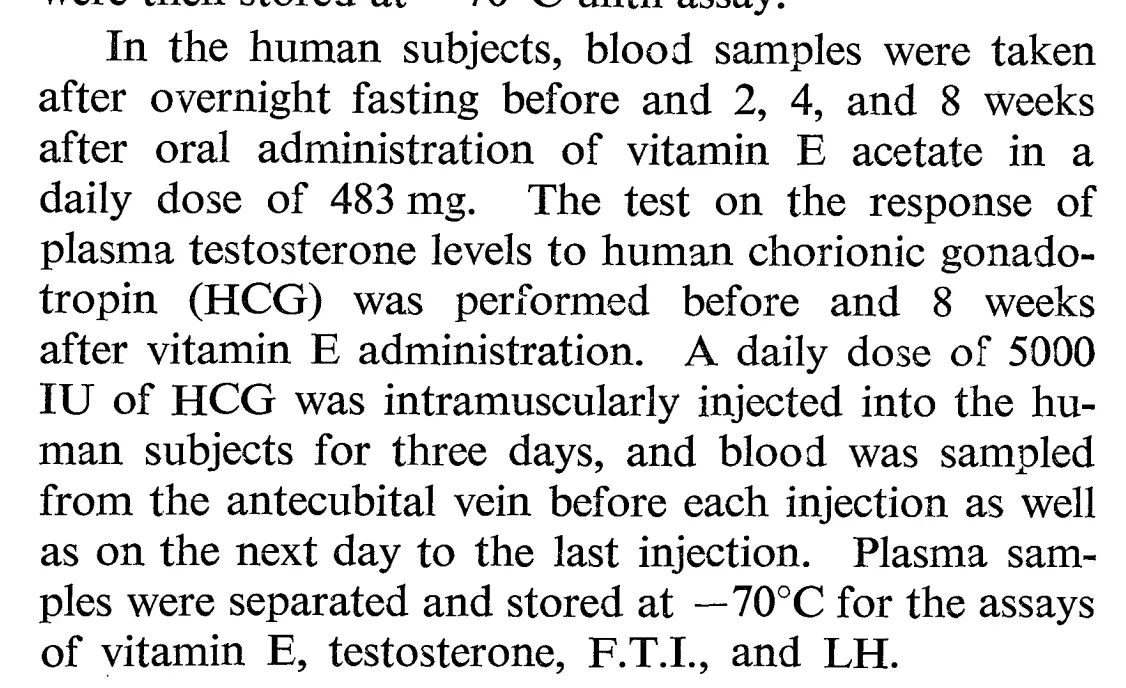
Subjects were restricted to eating the diet the hospital put them on, with a consistent amount of vitamin E (3-5 mg).
They were then put on 483 mg (724.5 IU) of vitamin E for 8 weeks.
This is a huge dose — over 30x the "recommended" daily amount.
It was also vitamin E acetate — a relatively poorly absorbed form of the vitamin.
The Study Results
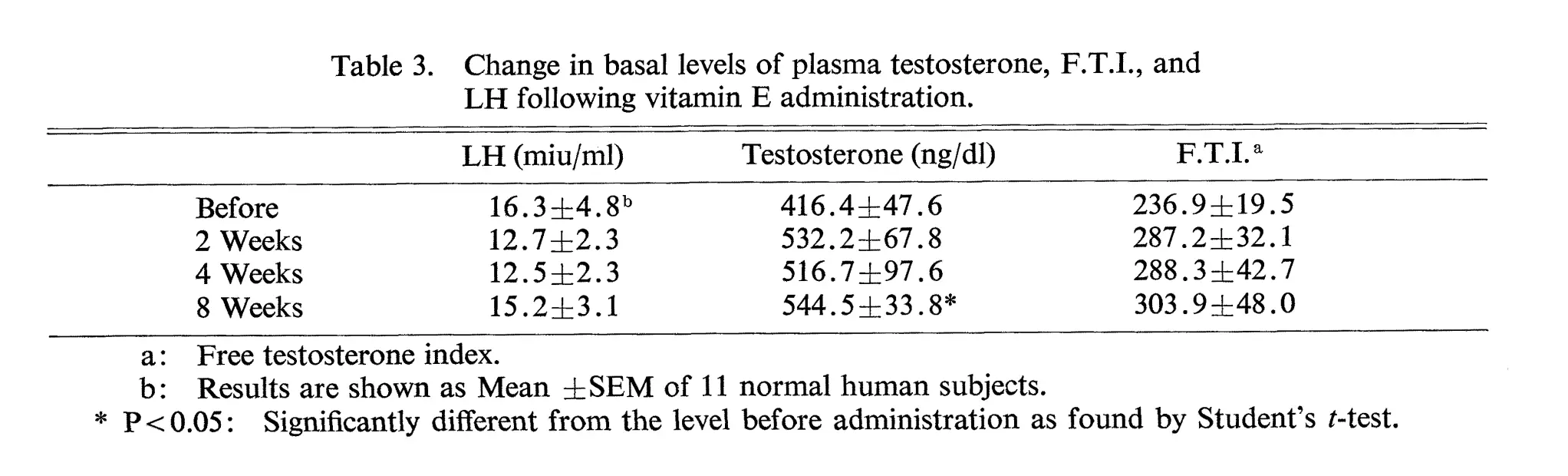
After just 2 weeks, high-dose vitamin E was shown to increase both total and free testosterone substantially.
Total T went from 416 to 545 ng/dl by the end of the 8 weeks.
The free T index increased by ~28%.
No changes in LH — indicating that the sensitivity of the testosterone-producing Leydig cells was improved.
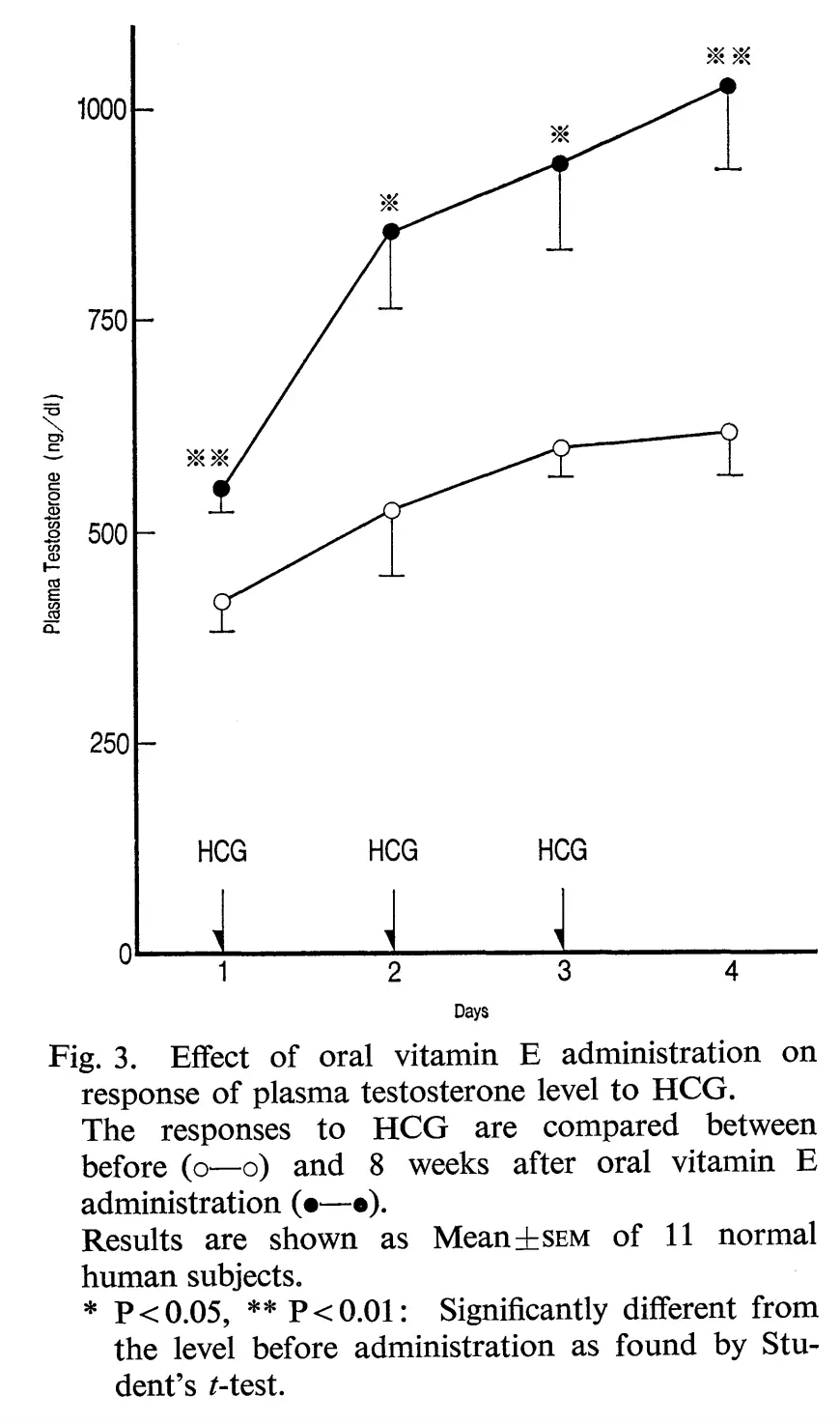
Vitamin E also provided a massive boost in T in response to stimulation.
- Before vitamin E: T rose from 415.5 → 609.2 ng/dl (↑1.47x) after hCG stimulation
- After vitamin E: T rose from 552.7 → 1015.7 ng/dl (↑1.85x)
hCG is a hormone that stimulates the testes to produce T. Vitamin E dramatically improves the response.
Why is Vitamin E so Good for Testosterone?
Vitamin E is key for fertility in both males and females.
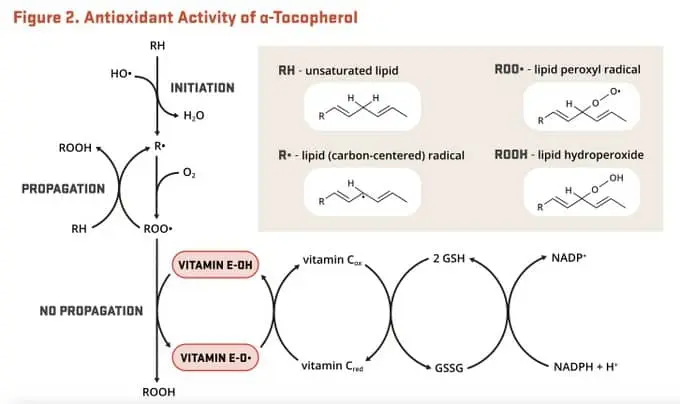
The main reason is that vitamin E prevents the breakdown of polyunsaturated fats (think seed oils). Other studies show that high seed oil diets can worsen testosterone output.
Hormone-producing tissues like the adrenals, pituitary, and testes all store vitamin E.
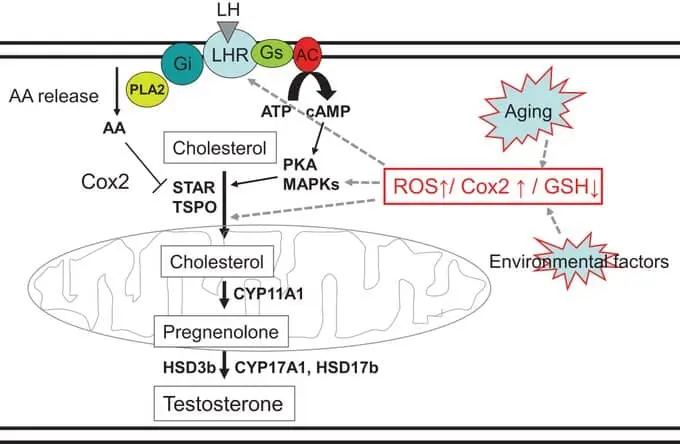
Excessive oxidative stress — causing damage to polyunsaturated fats — is the key driver of tissue injury and physical damage. This process also highly impairs these tissues' ability to respond to stimulus and secrete hormones.
Likely because this process interrupts the hormone production cascade at multiple levels. For instance, oxidative stress can impair cholesterol uptake into the mitochondria, which is needed to pump out steroid hormones. It also destroys mitochondrial function in general.
Vitamin E helps prevent this process and can restore normal hormonal production.
Ensuring a robust antioxidant system is key for every aspect of health — hormonal health being one of the biggest examples.
Vitamin E isn't a T booster in the traditional sense — it doesn't force your body to churn out more. Rather, it repairs a defective T production system.
However, given that several studies indicate benefit for supplementation beyond even correcting deficiency, it could be something to investigate if low T or infertility are areas of concern.
Dosage
If you do want to consider supplementing, we typically use this brand, an affiliate of ours.
I would not suggest doing megadoses like were found in the study for too long a period of time. But if you've been eating lots of seed oils your whole life, or have other exposures to high oxidative stress, it could be warranted.
Otherwise, a maintenance dose of E at around 13-15 mg is reasonable.
Analyze & Optimize Team